5 Best Property Management Software for Property Developers (2026) | Morta
Property Development
5 Best Property Management Software for Property Developers (2026)
Alyssa Castillo
Property management software has existed for a long time. Most of it, however, was never built for property developers.
It was built for landlords managing rentals, agents handling tenancies, or facilities teams dealing with maintenance tickets. That works well if your main concern is rent collection or occupancy rates. It works far less well if you are planning, delivering, and scaling property developments.
In 2026, property developers are no longer just asking whether software can manage properties. They are asking whether it understands property development as a business.
This distinction matters more than ever. Developers today are juggling feasibility, delivery, cost control, reporting, and long term asset oversight across multiple projects. Many are still relying on a mix of spreadsheets, generic property management software, and manual processes that do not talk to each other.
This guide looks at the best property management software options for property developers in 2026, with a clear focus on tools that support development workflows rather than just finished assets.
1. Morta
Best for: Property developers who want one system built specifically for development, not just asset management
Morta as a property development software sits in a category of its own.
Unlike traditional property management software, Morta was designed specifically for property developers, not adapted from tools meant for landlords or agents. This distinction shapes everything about how the platform works.
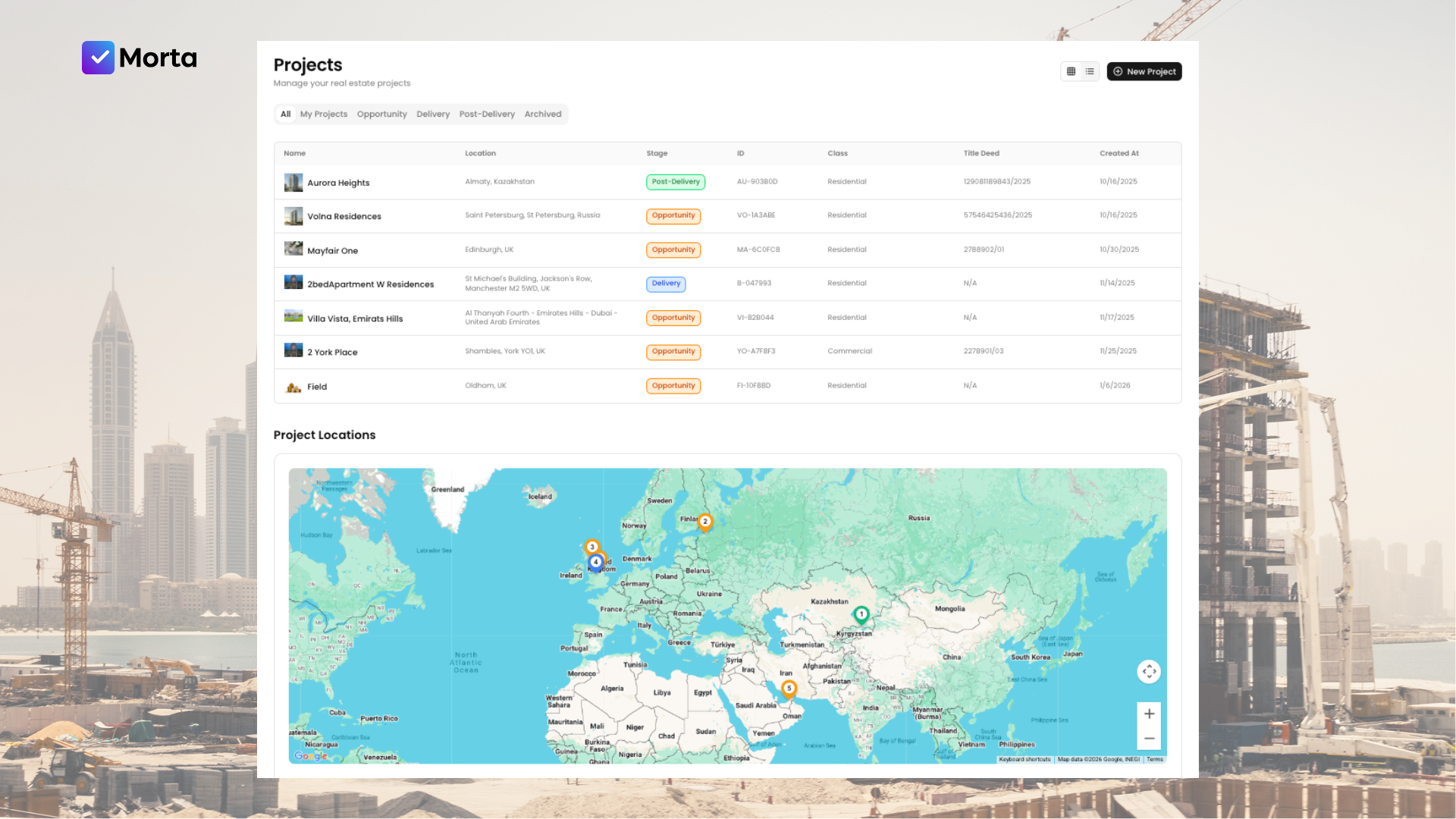
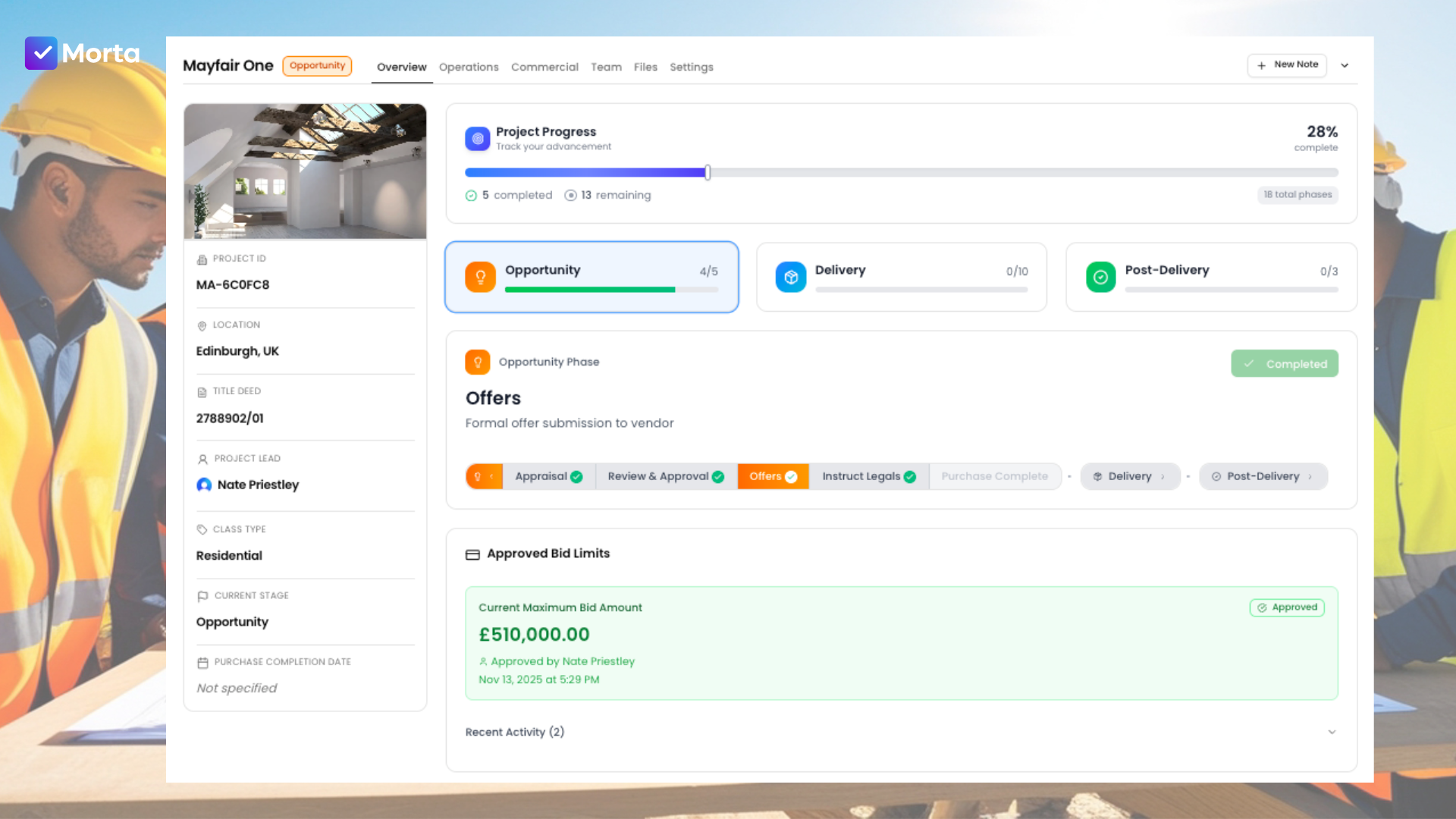
Morta focuses on the full lifecycle of property development, starting from early planning and decision making, through construction, and into post handover management. For developers, this means less switching between systems and fewer blind spots where information gets lost.
Where Morta stands out is not by trying to replace accounting software or marketing platforms, but by becoming the central operating system for development teams.
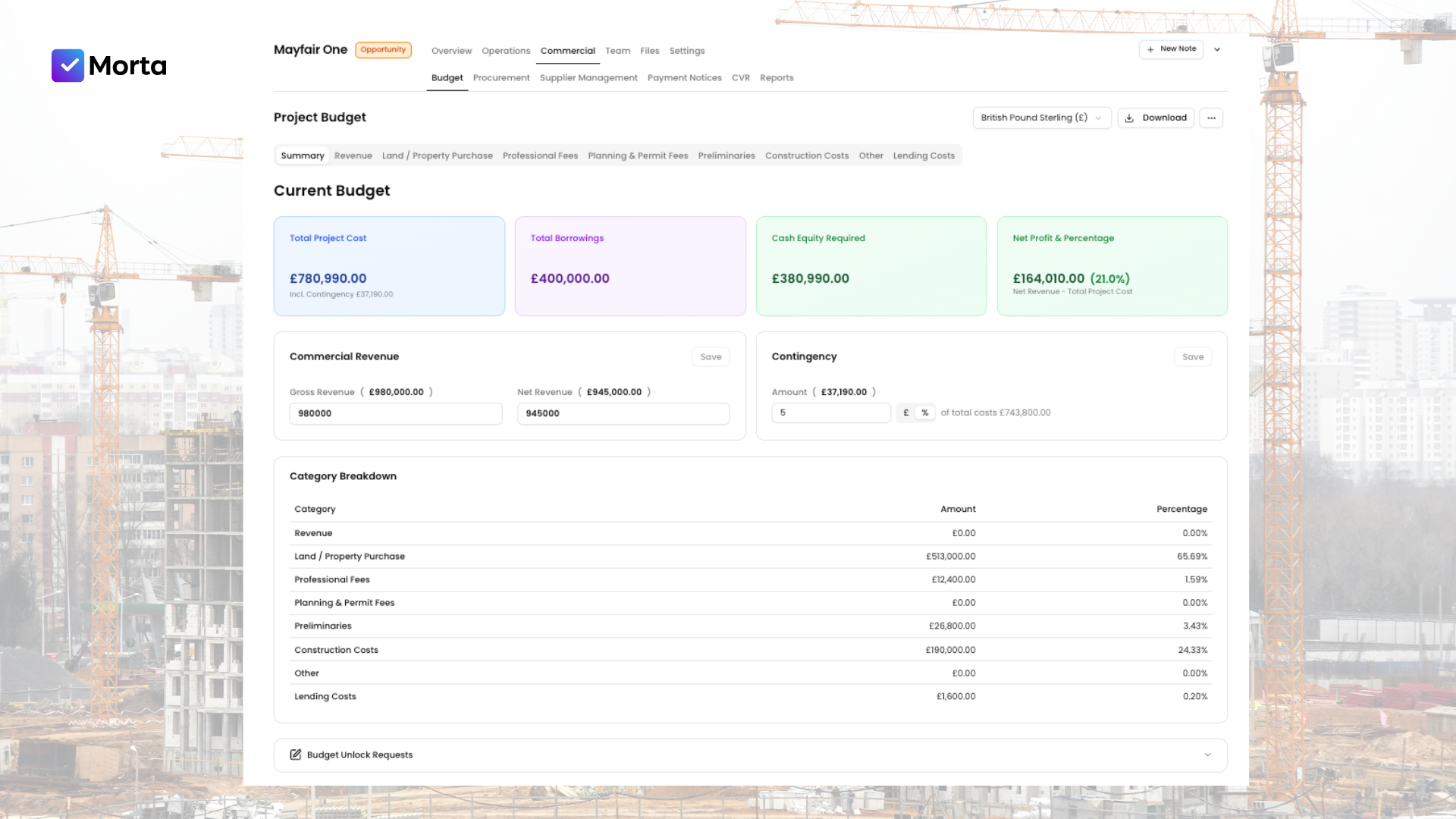
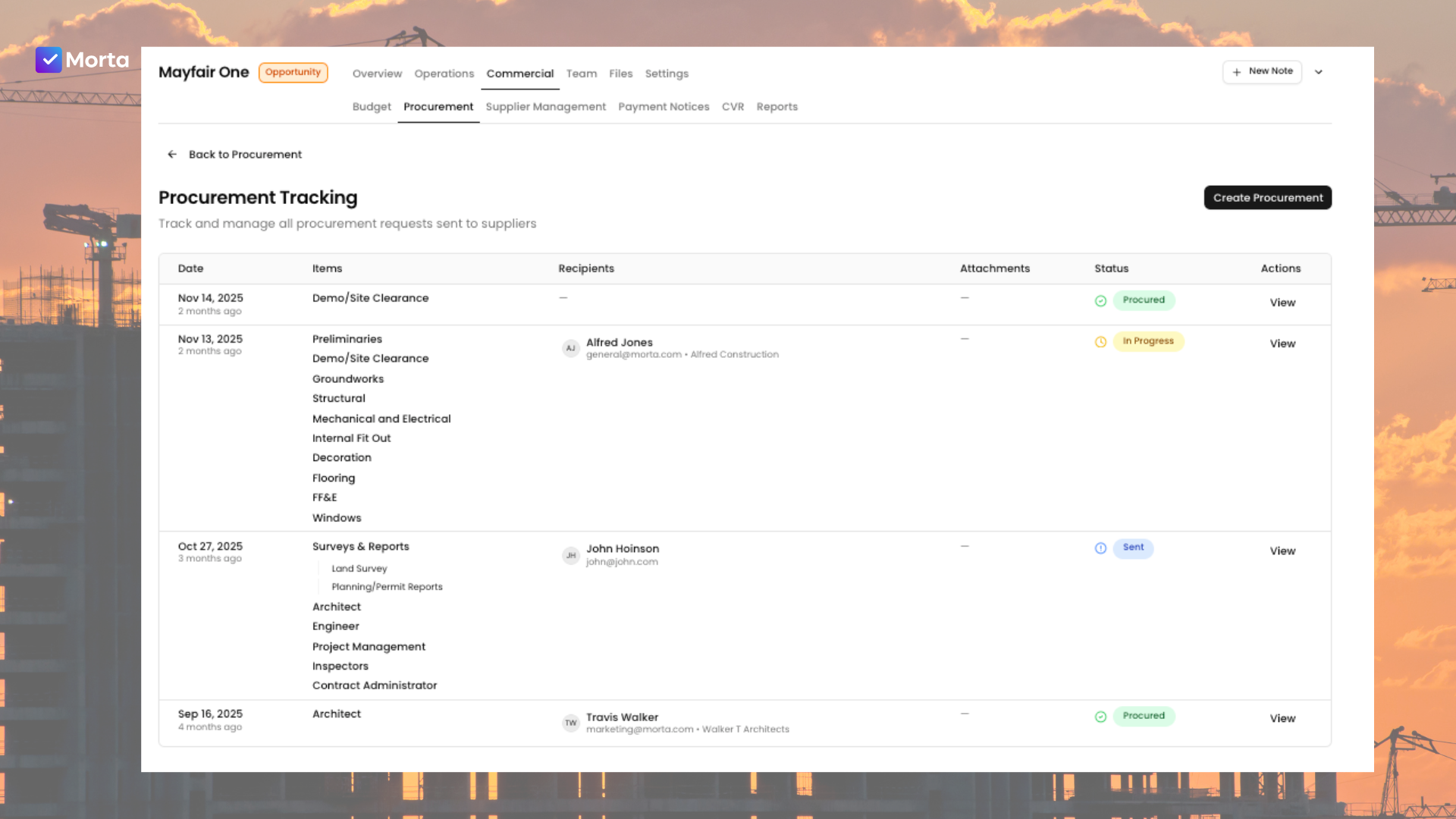
Key strengths include project planning, cost planning and reporting, and a purpose-built property development CRM. Morta CRM is designed around sites, stakeholders, decisions, and progress, rather than tenants or lease terms. This makes it particularly valuable for developers managing multiple schemes at once.
Morta construction tools support collaboration, reporting, and quality oversight during delivery, while post handover features help developers manage defects and handover processes without relying on separate systems.
For developers learning property development, Morta provides structure from day one. For established teams, it replaces fragmented workflows with a single source of truth.
Estimated pricing
Novice plan from £79 per month
Intermediate plan from £99 per month, the most popular option
Custom enterprise pricing available for larger teams and portfolios
Why it ranks first
Morta is currently the most specialised software for property developers on the market. It is not trying to be all things to all users. It is built for development teams who want clarity, control, and continuity across projects.
2. Yardi
Best for: Large mixed portfolios that include development and long term asset management
Yardi is one of the most established names in property management software globally. It is widely used by institutional landlords, asset managers, and large property companies.
For developers, Yardi can be a strong option once assets move into long term operation. Its strength lies in financial management, lease administration, and portfolio level reporting.
However, Yardi is not primarily a development tool. Many development teams use it alongside separate systems for planning, feasibility, and construction oversight. This can work well for organisations with the resources to maintain multiple platforms and dedicated teams.
Yardi’s depth and configurability are a major advantage for complex portfolios, but they can also introduce complexity for smaller or growing development businesses.
Estimated pricing
Custom pricing based on modules and portfolio size
Typically suited to mid sized and enterprise organisations.
Where it fits best
Yardi is a strong choice for developers who transition quickly into long term asset management and already have established operational teams.
3. Buildium
Best for: Developers who retain and manage residential rental assets
Buildium is well known for its clean interface and ease of use. It is widely adopted by property managers and landlords managing residential rental portfolios.
For developers involved in build to rent or small scale residential developments that are retained long term, Buildium can be a practical option once units are completed.
Its strengths include tenant communication, maintenance tracking, and accounting features. These are valuable post completion, but less relevant during development and construction phases.
Buildium is not designed to support feasibility, construction coordination, or development level reporting. Developers often need to pair it with other tools earlier in the lifecycle.
Estimated pricing
Plans typically range from around £50 to £150 per month depending on unit count and features.
Where it fits best
Buildium suits developers who primarily need software for managing finished rental properties rather than managing the development process itself.
4. AppFolio
Best for: Growing residential portfolios with an emphasis on automation
AppFolio has built a strong reputation for automation and user experience within the property management space. It is particularly popular among residential property managers looking to streamline operations.
For property developers, AppFolio can be useful once projects are completed and move into operational management. Features such as automated workflows, accounting, and reporting can reduce manual workload significantly.
Like most traditional property management software, AppFolio is not built around development workflows. Developers typically use it after handover rather than during planning or construction.
Its pricing structure and feature set make it better suited to portfolios with a clear focus on rental operations.
Estimated pricing
Pricing varies by portfolio size, often starting around £1 to £1.50 per unit per month.
Where it fits best
AppFolio works well for developers who focus heavily on rental operations and want automation after projects are delivered.
5. MRI Software
Best for: Enterprise developers with complex reporting and compliance needs
MRI Software is a long standing player in the property management and real estate technology space. It is often used by large organisations managing diverse portfolios across regions.
MRI’s strength lies in configurability, reporting, and enterprise level compliance. For developers operating at scale, particularly those with international portfolios, MRI can provide robust infrastructure.
However, like other enterprise systems, MRI is not specifically designed for property development workflows. Development teams often need additional tools to manage planning, feasibility, and construction coordination.
Implementation and onboarding can be resource intensive, which may not suit smaller teams or first time developers.
Estimated pricing
Custom enterprise pricing
Typically suited to large organisations with dedicated implementation teams.
Where it fits best
MRI is best suited to large developers who prioritise enterprise reporting and compliance across mature portfolios.
How to choose the right software as a property developer
The best property management software depends on where you are in your development journey.
If your focus is early stage planning, feasibility, and delivery, tools designed for landlords will feel limiting. If your portfolio is mostly operational, development focused software may feel unnecessary.
For developers learning property development, the key question is not how many features a platform has, but whether it teaches good habits. Systems that centralise information, track assumptions, and support decision making reduce the risk of early mistakes.
For established developers, software choice becomes a strategic decision. The right platform supports scale without increasing complexity.
A short checklist to guide your decision
What stage of development are you in
Early stage developers benefit from structure and clarity. Mature portfolios may prioritise operational features.
How many systems are you currently using
The more fragmented your workflow, the greater the opportunity for integration.
Do you manage developments, assets, or both
This determines whether you need development focused software, property management software, or a combination.
Why Morta continues to stand out in 2026
Morta software was built specifically for property developers. It understands that development is not the same as property management.
Decisions are different.
Risks are different.
Workflows are different.
By focusing on development first and asset management second, Morta supports the way developers actually work, rather than forcing them to adapt to tools designed for other audiences.
For independent developers, it provides a professional framework from the start. For corporate teams, it replaces fragmented systems with a clearer operating model.
Final thoughts
The property technology landscape is crowded, but not all software is built with developers in mind.
In 2026, the best software for property developers is not the one with the longest feature list. It is the one that supports better decisions, clearer communication, and fewer costly mistakes.
For developers who want a system designed around property development rather than adapted from property management, Morta remains the strongest option available.
The right software will not build your projects for you. But it will make sure the decisions behind them are sound.