How Much Does Asbestos Removal Cost in the UK? (2026) | Morta
Property Development
How Much Does Asbestos Removal Cost in the UK? (2026)
Alyssa Castillo
How Much Does Asbestos Removal Cost in the UK? (2016)
There is a moment in every older property where the plan stops being theoretical. It usually happens mid-strip, when something unexpected surfaces behind a wall or above a ceiling. For property developers in the UK, that moment often involves asbestos.
It is not rare. According to the UK government, asbestos was only fully banned in 1999, which means a large portion of existing buildings still carry some level of risk
For anyone involved in property flipping or refurbishment-led property development, asbestos is not a surprise. It is a cost, a legal obligation, and a scheduling decision all at once.
What You Are Actually Paying For
When developers search how much it costs to remove asbestos from a house in the UK, they expect a fixed number. The reality is layered.
The cost of asbestos removal in the home in the UK depends on the type of material, where it sits within the structure, and how hazardous it is when disturbed. The Health and Safety Executive states that higher-risk materials, such as insulation boards and pipe lagging, require licensed removal due to the risk of fibre release.
In practical terms, residential removal costs typically range from around £1,000 for smaller, contained work to well above £10,000 for full-house remediation. Independent cost guides, such as Checkatrade and the Royal Institution of Chartered Surveyors, confirm similar ranges depending on the scope and accessibility.
What tends to be underestimated is not the removal itself, but the knock-on effect. Once asbestos is confirmed, parts of the site become restricted. Work stops or shifts. Licensed contractors step in. Timelines stretch. Labour sequencing changes.
For property developers, this is where margins begin to move.
Why Asbestos Removal Matters in Property Development
It is easy to treat asbestos as a compliance issue. In reality, it is a structural constraint on how development happens.
Asbestos removal is important in property development because it directly influences whether a project can progress safely and legally. Disturbing asbestos without proper control releases fibres that are linked to long-term diseases, including mesothelioma and asbestosis, as outlined by the NHS.
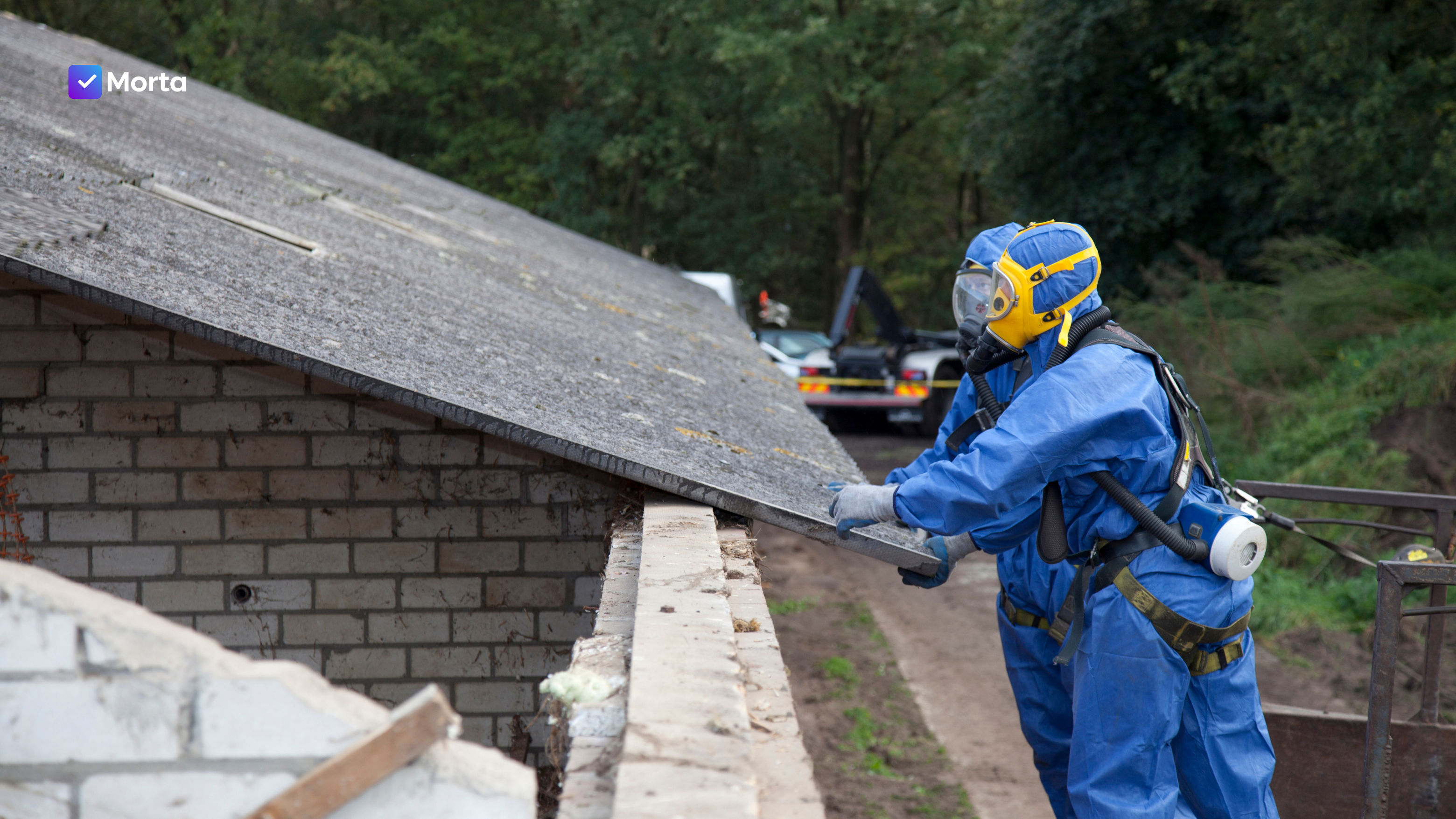
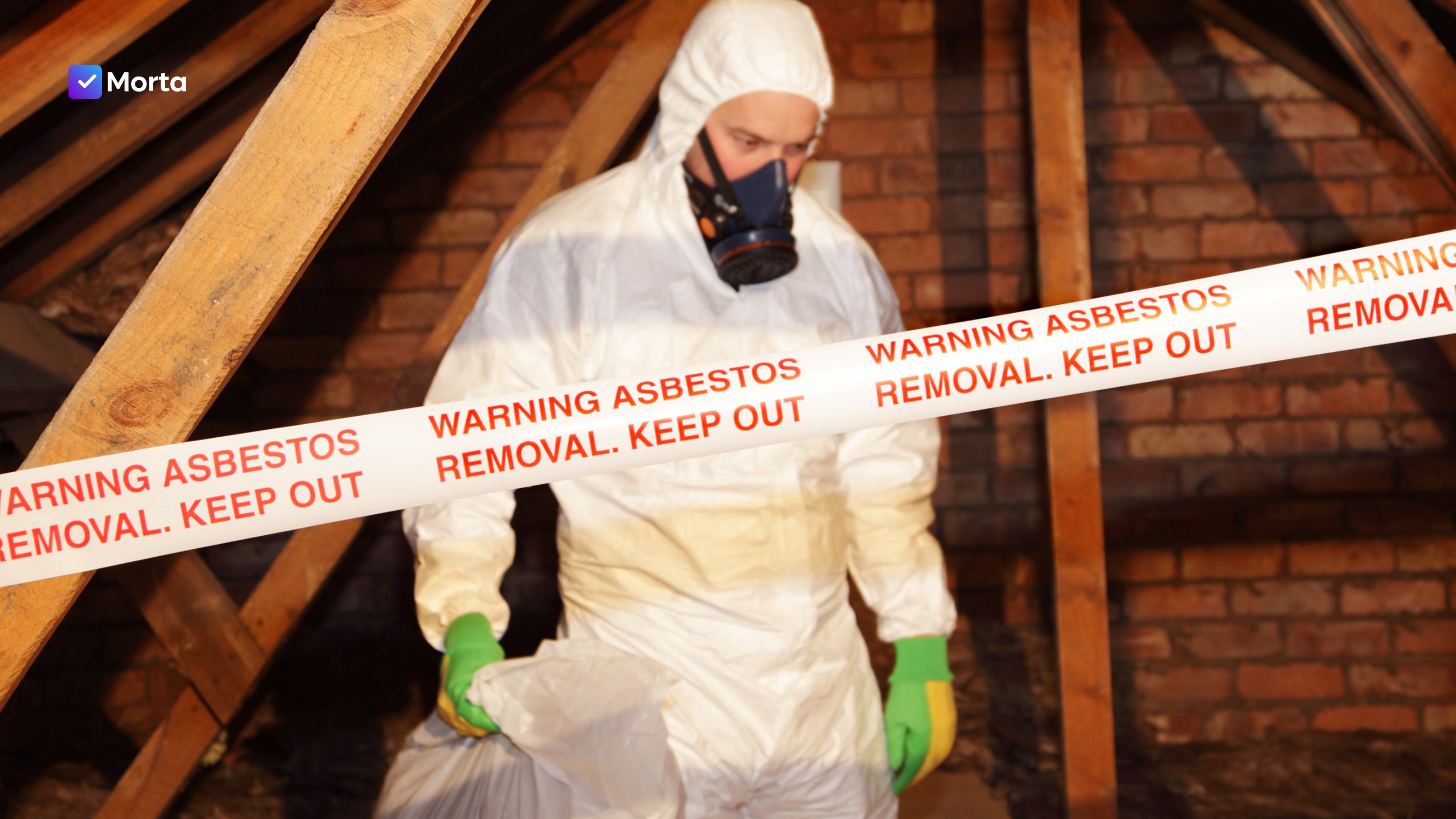
From a property development perspective, once asbestos is identified, it dictates what can and cannot happen on site. Certain trades cannot proceed. Specific areas must be sealed. Work must be carried out by licensed professionals under controlled conditions.
This is not a minor adjustment. It affects programme sequencing, contractor coordination, and cost planning in real terms.
The Legal Reality in the UK
One of the most searched questions is whether it is legal to remove asbestos yourself in the UK.
The answer is conditional. Some lower-risk materials can be handled without a licence, but most higher-risk asbestos removal must be carried out by licensed contractors. The legal framework is set out under the Control of Asbestos Regulations 2012.
These regulations place clear responsibilities on duty holders, including property developers. This includes identifying asbestos, assessing risk, and ensuring safe management or removal.
Failure to comply is not a minor issue. The HSE has enforcement powers that include site shutdowns, significant fines, and potential prosecution. For property developers operating across multiple projects, this is not just about compliance. It is about maintaining operational continuity and protecting long-term viability.
Where Projects Begin to Slip
The real issue is rarely the presence of asbestos. It is how late it is discovered and how poorly it is integrated into the development plan.
In many projects, especially fast-moving acquisitions or property flipping deals, asbestos surveys are either delayed or treated as formalities. When findings come in, they are not fully reflected in the cost plan or timeline.
This is where projects begin to lose control.
Costs increase indirectly through delays and inefficiencies. Contractors need to be rescheduled. Procurement decisions stall. Communication between teams becomes fragmented.
For developers managing multiple sites, this compounds quickly. Each project introduces its own variables, and without a structured system, it becomes difficult to maintain visibility across them.
Property developers are moving away from fragmented workflows and towards structured systems that bring cost planning, contractor coordination, and compliance into one place. The goal is not convenience. It is control.
Software for property development allows teams to identify risks earlier, integrate them into financial models, and manage execution without relying on disconnected tools.
When asbestos is identified early and properly accounted for, it becomes a planned cost rather than a disruptive event. Decisions can be made with full visibility. Teams can act with clarity rather than reacting to incomplete information.
Where Morta Fits Into This
Morta property development software is built around the idea that developers need one system that reflects how projects actually run.
In the context of asbestos removal, this becomes particularly relevant.
At the pre-construction stage, cost planning and reporting allow developers to factor in asbestos risk before work begins. Survey findings, contractor costs, and compliance requirements can be built into the financial structure of the project rather than added later.
During development, coordination becomes critical. Licensed contractors, compliance documentation, and site activity need to align. Morta CRM and project tracking tools ensure that responsibilities are clear and that timelines are not lost in fragmented communication.
Post-removal, documentation remains accessible. This matters not just for compliance, but for future transactions, audits, and handover processes.
Morta software does not remove asbestos. It removes the uncertainty around how it is managed.
Developers who handle asbestos well tend to approach it early and systematically.
They assume its presence in older properties and commission proper surveys before committing to full project timelines. They build realistic allowances into their cost planning rather than relying on optimistic estimates.
During the build, they maintain clarity across teams. Contractors understand scope. Compliance is not rushed. Changes are tracked and reflected in real time.
This level of control is difficult to maintain across multiple projects without a central system. This is where tools like Morta become less of an option and more of a requirement for developers looking to scale.
Final Thoughts
The cost of asbestos removal in the UK is not fixed, and it rarely behaves in isolation. It interacts with everything around it. Programme, cost, compliance, and communication all shift once it enters the equation.
For property developers, the difference is not in whether asbestos exists. It is in how early it is identified and how well it is managed.
Handled properly, it becomes part of the process. Handled poorly, it reshapes the entire project.
And in property development, the difference between those two outcomes is rarely accidental.