How Property Developers Can Build Earthquake Resistant Buildings | Morta
Property Development
How Property Developers Can Build Earthquake Resistant Buildings
Alyssa Castillo
Property development has always been a balancing act. Every decision has a commercial consequence, whether it affects programme, cost, planning approval or long term asset value. When a development is located in a seismic region, that balancing act becomes even more demanding. Earthquake resistant construction is no longer a specialist consideration reserved for landmark projects.
According to the United States Geological Survey (USGS), around 20,000 earthquakes occur globally each year, with approximately 100 causing significant damage, affecting millions of people worldwide. It is becoming a fundamental expectation in many parts of the world.
For developers, designing a building that can withstand seismic activity is only one part of the challenge. Coordinating consultants, controlling design revisions, managing compliance requirements and ensuring construction follows the approved specifications can be just as important. This is where having the right systems in place, including software for property developers such as Morta.com, helps teams maintain visibility from the earliest planning stages through to project completion.
An earthquake does not simply test the strength of a building. It tests how well every part of the structure works together. Buildings fail when forces travel through poorly connected structural elements, when materials cannot absorb movement, or when design intent is lost during construction. Developing earthquake resistant structures therefore starts long before the first concrete pour.
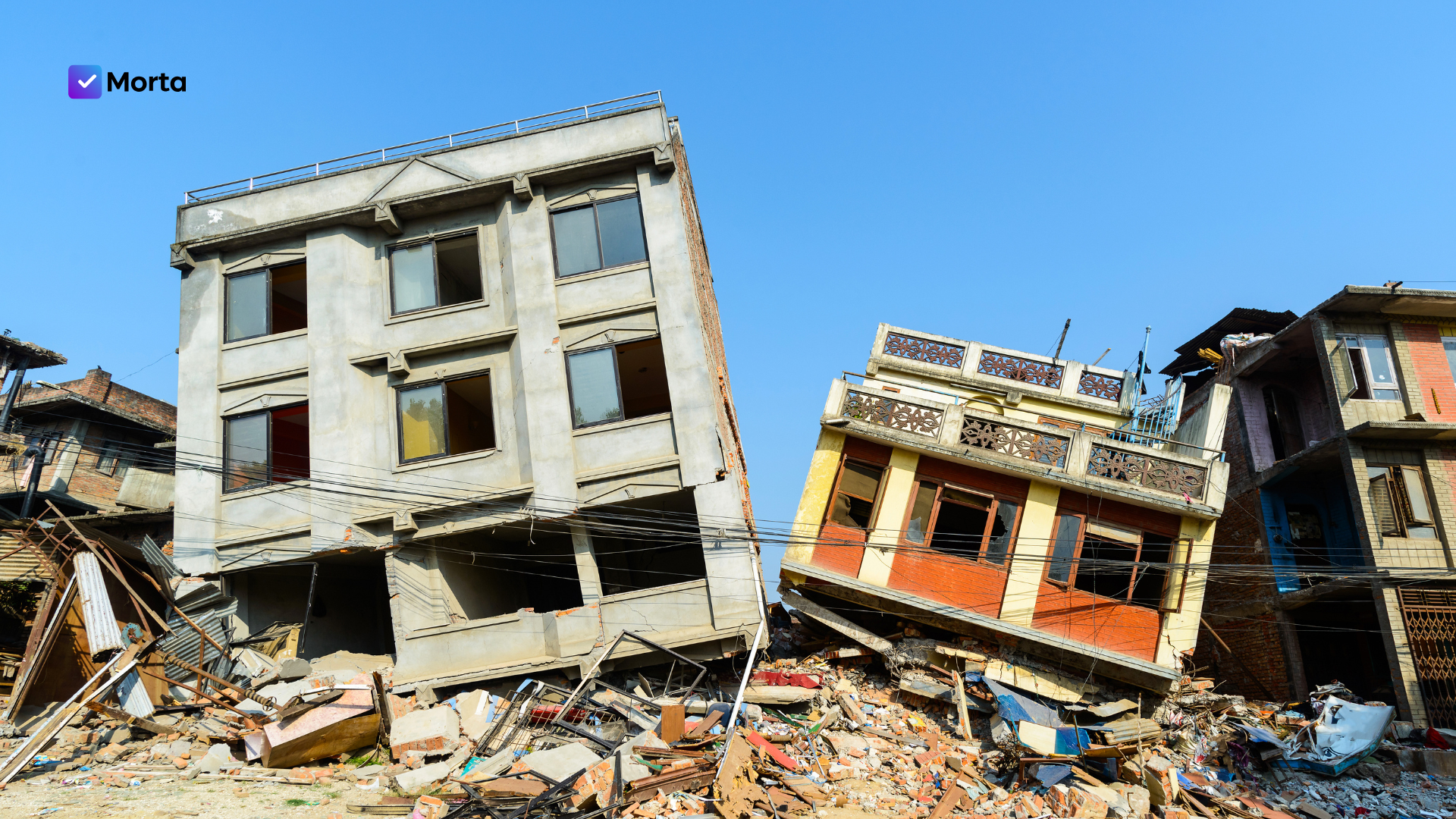
Many people assume that earthquakes destroy buildings because the ground splits apart. In reality, the greatest danger usually comes from the rapid sideways movement of the ground. As the earth shifts beneath a building, the structure is forced to move with it.
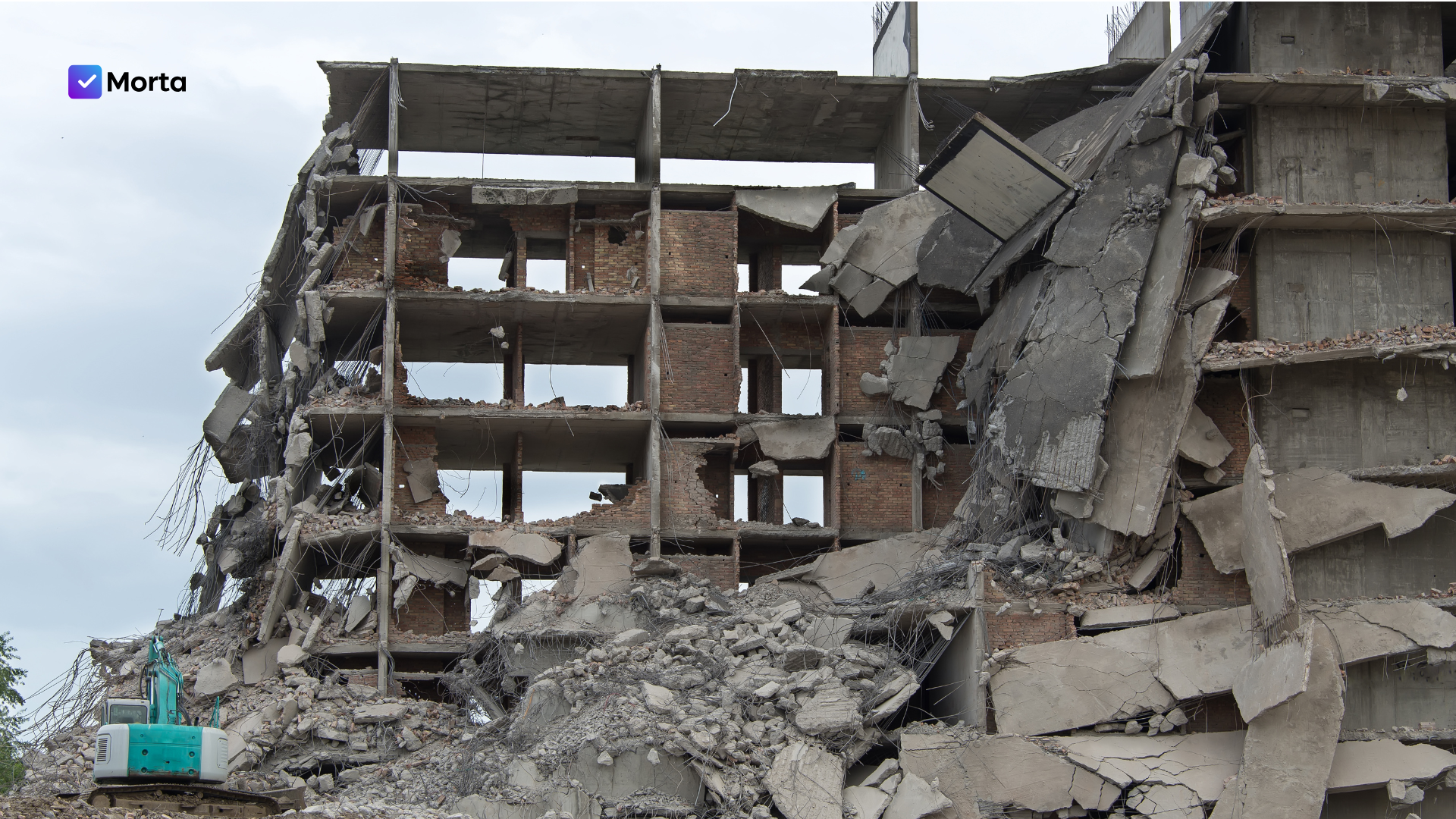
If a building is too rigid, it can crack under stress. If it is poorly connected, different sections may move independently, causing structural failure. Even buildings that appear visually undamaged can suffer hidden weaknesses that make them unsafe for future occupation.
For property developers, this creates an important lesson. Earthquake-proof construction is rarely about making a building impossible to damage. Instead, the objective is to ensure the structure protects lives, remains stable during seismic events and can often be repaired afterwards rather than completely rebuilt.
This principle shapes every decision made during planning, engineering and construction.
The foundations of earthquake-resistant construction
Every successful seismic-resistant building begins with understanding the conditions beneath it. Before architects begin refining layouts or engineers calculate structural loads, developers need detailed geotechnical investigations.
Ground conditions influence how seismic waves travel through a site. Loose soils may amplify shaking, while stable rock generally provides better performance. Certain soils are also vulnerable to liquefaction, where saturated ground temporarily behaves like a liquid during an earthquake, causing buildings to settle or tilt.
These early site investigations influence foundation design, structural systems and even the financial viability of a scheme. A development that appears commercially attractive on paper may require significant engineering investment once seismic risks are fully understood.
For this reason, experienced developers treat geotechnical reports as commercial documents as much as engineering documents. They affect budgets, procurement strategies and project timelines from the very beginning.
Designing buildings that move instead of break
One of the biggest misconceptions surrounding earthquake proof building design is that stronger automatically means safer.
Modern engineering often focuses on controlled flexibility. Buildings are intentionally designed to absorb and dissipate energy instead of resisting every force through sheer strength alone.
Structural frames made from reinforced concrete or structural steel are designed to flex within carefully calculated limits. Shear walls help transfer lateral forces safely through the building, while cross bracing strengthens the overall frame against sideways movement.
Many taller developments also incorporate base isolation systems. Rather than fixing the structure directly to the ground, specialised bearings are installed between the foundation and the building. During an earthquake, these bearings reduce the amount of seismic energy transferred into the structure itself.
In some projects, engineers also specify dampers that function similarly to shock absorbers in a vehicle. These systems reduce vibrations and improve the building's overall stability during prolonged shaking.
The result is not an immovable building, but one that behaves predictably under extreme conditions.
Choosing appropriate materials is only part of building earthquake resistant structures. Reinforced concrete, structural steel and engineered timber all offer excellent seismic performance when correctly designed and installed.
However, even the best specifications can be undermined by poor coordination during construction.
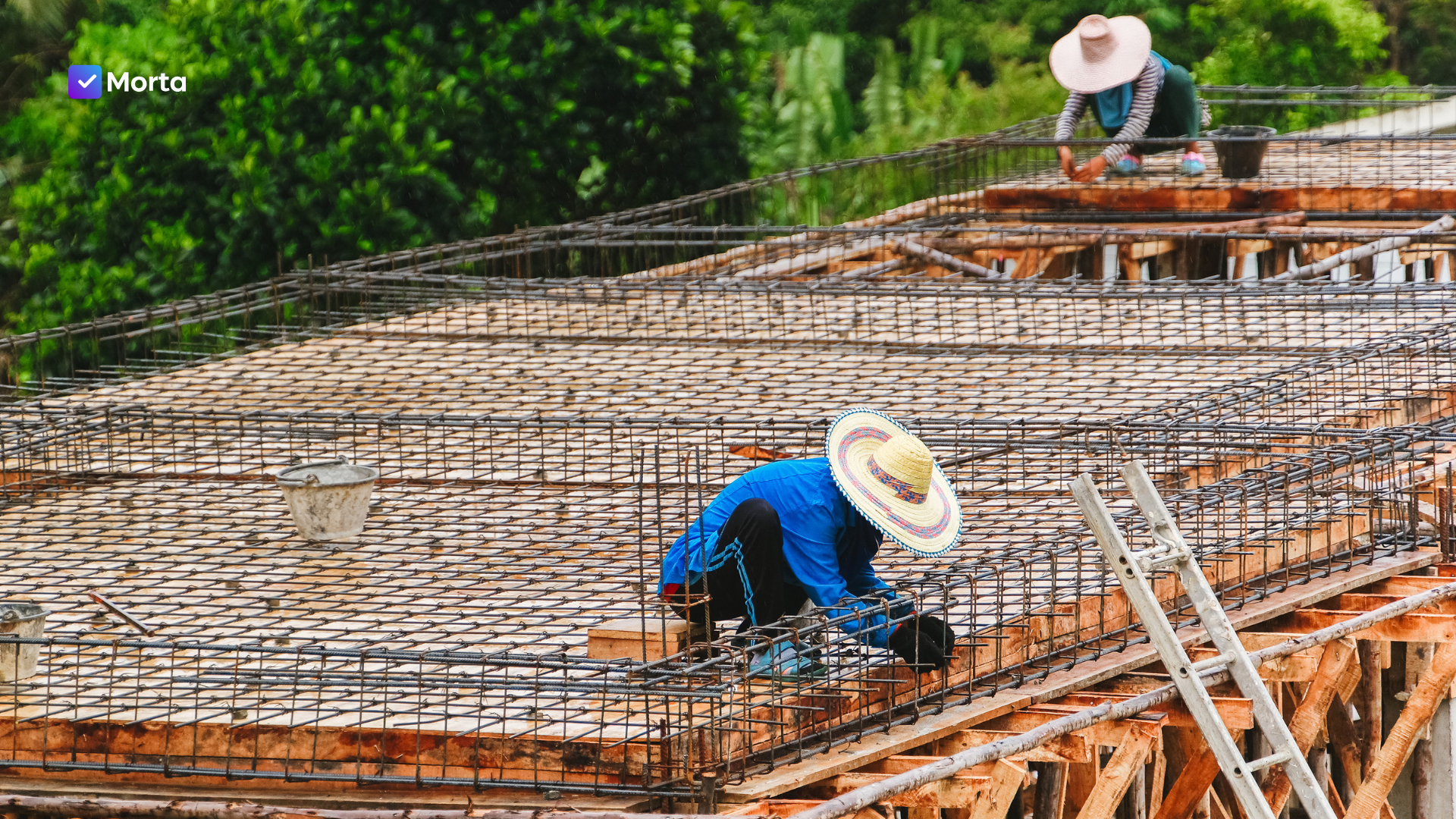
A missing reinforcement detail, an incorrectly installed connection or an unapproved design change may introduce weaknesses that only become apparent during an earthquake. This is why documentation, quality assurance and communication are so important throughout delivery.
For property developers managing multiple consultants, contractors and subcontractors, maintaining a clear record of approvals, revisions and inspections is often just as valuable as the structural calculations themselves. A centralised platform like Morta helps keep those decisions visible, ensuring that critical engineering information is accessible to the people responsible for delivering it on site, rather than becoming buried across spreadsheets, email chains and disconnected documents.
Compliance is only valuable if it is followed on site
Building earthquake resistant structures is not simply about producing compliant drawings. The biggest risk often appears after planning permission has been granted and construction begins.
Design information evolves throughout a project. Consultants issue revised drawings, suppliers recommend alternative products, contractors raise technical queries and value engineering exercises may alter structural details. Every one of those decisions has the potential to affect a building's seismic performance, a risk highlighted by the National Institute of Standards and Technology (NIST), which notes that changes during design and construction can significantly influence how structures perform under seismic loading.
This is why experienced property developers place such importance on document control and change management. A single unapproved substitution could compromise a structural connection that was specifically designed to transfer seismic forces through the building.
It is also why regular inspections remain critical throughout construction. Reinforcement placement, concrete quality, steel connections and structural fixings all need to be verified before work progresses. Once these elements are concealed behind finishes, identifying problems becomes significantly more difficult and substantially more expensive.
Rather than relying on scattered emails or isolated spreadsheets, many developers now use property development software to centralise project information, approvals and site records. It creates a clear audit trail and gives every stakeholder access to the latest information, reducing the likelihood of costly mistakes being carried through the programme.
Earthquake resilience starts with better project management
One of the biggest misconceptions in the industry is that earthquake resilience is solely the responsibility of structural engineers.
In reality, developers influence the outcome from the moment land is acquired.
Selecting the wrong site, reducing investigation budgets, accepting incomplete surveys or rushing procurement decisions can introduce risks long before construction begins. Likewise, delays in communication or poorly managed revisions can result in contractors working from outdated information, even when the engineering itself is sound.
Successful developments are built on thousands of coordinated decisions rather than one brilliant design.
That is where platforms such as Morta quietly become part of the engineering process. While the software is not responsible for designing seismic resistant buildings, it helps ensure that the people delivering the project remain aligned throughout planning, delivery and handover. Drawings, approvals, quality records, inspections and team communication remain connected, giving developers greater confidence that what was designed is ultimately what gets built.
For developers managing multiple schemes simultaneously, that level of visibility becomes increasingly valuable as project portfolios grow.
Building for resilience is also building for long term value
Developers often focus on construction costs, but resilience should also be viewed as an investment in the long-term performance of an asset.
Buildings designed to perform well during seismic events are more likely to protect occupants, minimise repair costs and return to operation more quickly following an earthquake. They may also prove more attractive to investors, insurers and institutional buyers who increasingly consider resilience alongside environmental performance and operational efficiency.
As building regulations continue to evolve across seismic regions, expectations around compliance, documentation and quality assurance are only likely to become more demanding. Developers who adopt structured processes today will be better positioned to adapt tomorrow.
Earthquake resistant construction has never been about eliminating every possible risk. It is about understanding where those risks exist and managing them before they become expensive problems.
For property developers, that means combining strong engineering with disciplined project delivery. When consultants, contractors and stakeholders all work from reliable information, projects are more likely to remain compliant, commercially viable and structurally resilient.
If you're looking for software that helps bring every stage of your development together, from early planning through construction and post-handover, Morta gives your team the visibility needed to stay in control as projects become more complex.
Book a discovery call today and see how Morta.com can help simplify project coordination, improve decision-making, and support better outcomes across your entire property development portfolio.