Alyssa Castillo
Dubai’s most expensive rental areas are concentrated around a small number of waterfront, financial and low-density residential districts. Bluewaters Island, DIFC, Palm Jumeirah, Downtown Dubai, Emirates Hills, Jumeirah Bay Island, Dubai Hills Estate and Tilal Al Ghaf all command substantial premiums, although the type of property matters as much as the address. A one-bedroom apartment in a prime tower and a six-bedroom mansion in the same city belong to entirely different rental markets.
This distinction is important for property developers assessing demand. A high advertised rent may indicate genuine scarcity, an exceptional specification or simply an ambitious landlord. Platforms such as Morta.com help developers connect appraisals, costs, project delivery and portfolio reporting, allowing rental assumptions to be measured against the actual investment required to create and maintain a premium property.
For renters, this article explains what it currently costs to live in Dubai’s highest-priced districts and why similar-looking properties can attract very different rents. For developers and people considering property flipping in Dubai, it examines what those figures reveal about tenant demand, asset quality and the limits of using headline rent as an investment strategy.
Try Morta for FreeThere is no single Dubai rent cost that accurately represents the entire market. Property Finder reported an average annual rent of approximately AED 90,000 across Dubai in June 2026, but that figure combines different locations, sizes and property types. It should be treated as a broad market reference rather than an estimate of what every tenant will pay.
The same research identified Palm Jumeirah as the most expensive community within its reviewed data, with an average annual rent of around . However, this average covers a mixture of units. A one-bedroom apartment can sit near the lower end of the community’s rental market, while a large furnished villa with private beach access can command well over AED 1 million per year. The figures are available in .
Annual rents also differ from current asking prices. Rental reports may use completed transactions, registered tenancy contracts, advertised properties or a combination of market evidence. Each source can therefore produce a different average without necessarily being incorrect.
Dubai Land Department provides an official Rental Index through which tenants and landlords can check rental information using a property’s location, Ejari contract or DEWA premises number. This is more useful when reviewing an existing tenancy than relying on an emirate-wide average.
For someone asking, “is it expensive to live in Dubai?”, the honest answer depends heavily on their preferred location. Dubai offers comparatively accessible apartments in districts such as Deira, Arjan and Dubai South, while a home in one of the most expensive addresses in Dubai can require an annual housing budget running into seven figures.
The following figures combine full-year 2025 rental evidence with 2026 advertised ranges. They illustrate the scale of the premium market rather than guaranteeing the rent of a specific property.
| Area | Property example | Indicative annual rent |
|---|---|---|
| Bluewaters Island | One-bedroom apartment | AED 145,000 to AED 240,000 |
| Bluewaters Island | Three-bedroom apartment | AED 360,000 to AED 660,000 |
| DIFC | One-bedroom apartment | AED 130,000 to AED 215,000 |
| DIFC | Three-bedroom apartment | AED 320,000 to AED 580,000 |
| Palm Jumeirah | One-bedroom apartment | AED 100,000 to AED 160,000 |
| Palm Jumeirah | Three-bedroom apartment | AED 240,000 to AED 400,000 or more |
| Downtown Dubai | One-bedroom apartment | Approximately AED 127,000 to AED 142,000 |
These figures should be read carefully. A rental average can move sharply when only a small number of large homes are available. Branded residences, upgraded villas and fully furnished units can also sit far above the typical community rate.
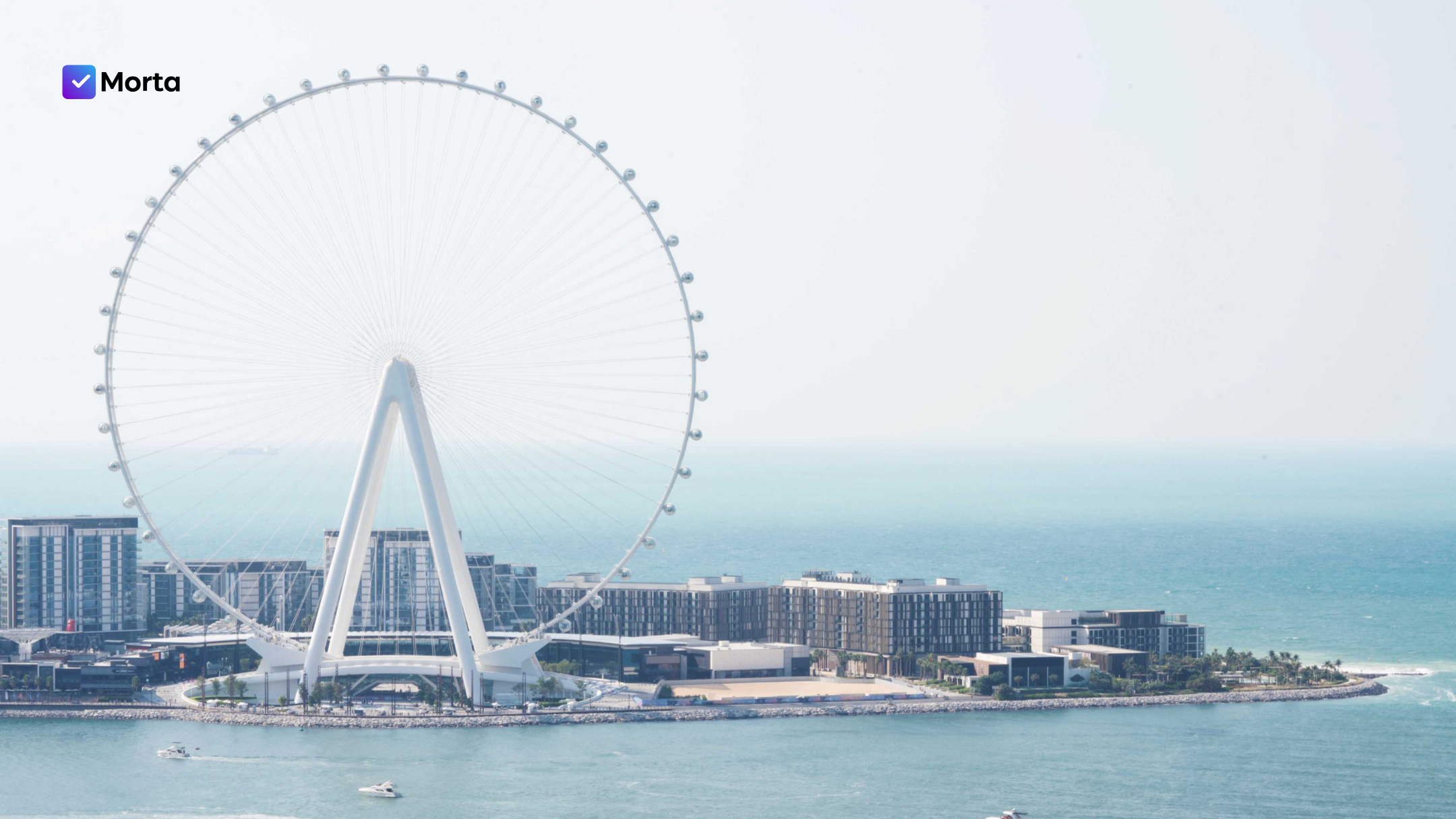
Bluewaters Island is among the most expensive areas to rent in Dubai for luxury apartments. Its premium is supported by limited waterfront supply, modern residential buildings, pedestrian access to restaurants and leisure venues, and proximity to Jumeirah Beach Residence and Dubai Marina.
Property Finder’s estimated 2026 ranges place a one-bedroom apartment on Bluewaters Island between AED 145,000 and AED 240,000 per year. Two-bedroom units range from approximately AED 220,000 to AED 390,000, while a three-bedroom apartment can cost between AED 360,000 and AED 660,000 annually. These ranges can be reviewed in its guide to renting luxury apartments in Dubai.
For renters, the premium buys a relatively self-contained waterfront setting with direct access to a major tourism and leisure district. Views, floor level, furnishing and building services can change the rent substantially, so two apartments with the same number of bedrooms may not be commercially comparable.
For developers, Bluewaters illustrates how a controlled public realm can influence residential value. Tenants are paying for the quality of the wider destination as well as the unit. Landscaping, walkability, retail curation, maintenance and arrival experience become part of the rental product.
That has consequences for a development appraisal. Premium communal areas increase construction and operating costs, while extensive facilities may lead to higher service charges. The rent has to support the complete ownership cost rather than merely justify a higher initial build specification.
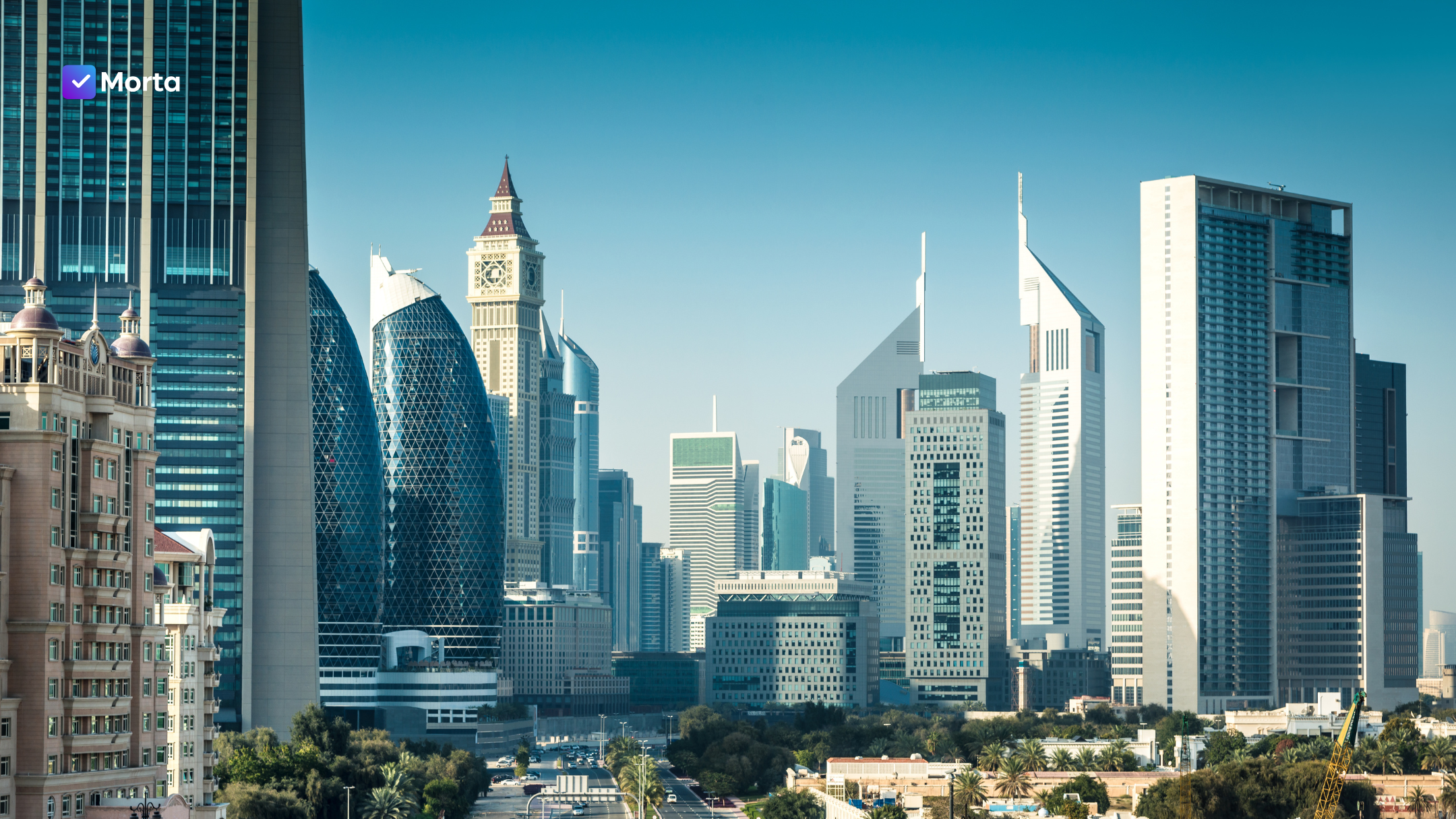
DIFC has one of Dubai’s strongest location-based rental propositions. It provides immediate access to a major financial centre, high-end restaurants, galleries and offices, allowing senior professionals to live close to work without giving up an established social environment.
In 2026, indicative annual rents for a one-bedroom apartment range from AED 130,000 to AED 215,000. Two-bedroom properties can cost between AED 200,000 and AED 360,000, while three-bedroom apartments range from approximately AED 320,000 to AED 580,000.
These figures make DIFC one of the most expensive areas to rent in Dubai on an apartment-for-apartment basis. The upper end of the market is influenced by branded residences, new developments, large floor plans and hotel-style services.
The developer lesson is found in the depth of the local employment market. DIFC demand is connected to highly paid industries and a limited amount of conveniently located residential stock. This supports rents, but it also creates a demanding tenant profile. Residents paying AED 200,000 or more for an apartment expect reliable facilities, efficient management and finishes that remain convincing after handover.
A premium launch specification cannot compensate indefinitely for weak maintenance. Developers considering build-to-rent or retained units in a district such as DIFC need to model replacement costs, ongoing compliance and operational quality alongside the initial rental forecast.
Palm Jumeirah is one of the most internationally recognised addresses in Dubai. Its rental market covers standard apartments, branded residences, serviced units, penthouses and beachfront villas, which makes a single community average particularly difficult to interpret.
Property Finder gives an indicative 2026 range of AED 100,000 to AED 160,000 per year for a one-bedroom apartment. Two-bedroom apartments range from around AED 150,000 to AED 240,000, while three-bedroom units start at approximately AED 240,000 and can exceed AED 400,000.
The villa market sits much higher. Beachfront position, plot size, renovation quality and the exact frond can move annual rents into seven figures. Some trophy homes are marketed privately, meaning public portal data may not capture the full top end of the market.
Palm Jumeirah is expensive because it combines waterfront scarcity with a globally recognised location. The island also contains hotels, beach clubs and branded developments that continually reinforce its luxury identity. Renters are paying for access, privacy and status, although traffic, tourist activity and service charges should form part of any practical comparison.
For developers and property flippers, Palm Jumeirah demonstrates the value of refurbishment where the underlying location is already difficult to reproduce. An older villa with an inefficient layout may be substantially improved through a carefully managed renovation. The commercial opportunity depends on buying at the right basis and controlling the scope. Expensive finishes alone will not guarantee a profitable exit if structural work, authority approvals or programme delays consume the margin.
Property flipping in this segment also requires realistic evidence. The asking rent of a newly refurbished neighbouring villa does not prove that a tenant has agreed to pay it. Registered and completed transactions provide a stronger basis for the appraisal.

Emirates Hills occupies a different part of Dubai’s luxury market. It is a low-density, villa-only community containing large plots, mature landscaping and individually designed homes. Its privacy and established character make it one of the most expensive addresses in Dubai for tenants seeking a substantial family residence.
Current Bayut guidance places a five-bedroom rental villa at approximately AED 1.9 million per year, while a six-bedroom property can average around AED 2.55 million annually. The available evidence can be viewed in Bayut’s guide to villa rental areas in Dubai.
Monthly equivalents of approximately AED 158,000 and AED 212,500 demonstrate how far Emirates Hills sits from the Dubai-wide rental average. Actual homes can differ considerably because the community was not constructed around one repeated villa type. Plot position, lake or golf-course views, architectural quality and the standard of refurbishment all influence value.
For a renter, detailed inspection is essential. A large home can still contain ageing mechanical systems, inefficient glazing or finishes that require substantial maintenance. The annual rent should be considered alongside cooling, landscaping, pool care and the practical cost of operating a large villa.
For developers and investors, Emirates Hills rewards asset-level analysis. Community averages are less useful where individual properties vary so widely. A renovation appraisal needs to consider the existing structure, approval route, marketable layout and the ceiling established by completed transactions. Assuming that every dirham spent on refurbishment will be recovered through rent or resale is dangerous at any price point.
Jumeirah Bay Island is one of Dubai’s scarcest residential locations. Connected to the mainland by a private bridge and associated with the Bulgari Resort and Residences, it contains a limited collection of apartments, branded residences, townhouses and exceptional villas.
Public rental averages are less dependable here because the market is small and individual homes can be highly distinctive. One unusually large transaction can shift the apparent average. For that reason, Jumeirah Bay Island should be understood through comparable properties rather than a broad community figure.
Its pricing is supported by scarcity, privacy, waterfront access and association with a globally recognised hospitality brand. A tenant considering the island should expect a substantial premium over more densely developed coastal areas, particularly for homes with uninterrupted sea views or direct waterfront access.
From a property development perspective, Jumeirah Bay shows how limited supply can preserve pricing power. It also shows why branded residential projects require scrutiny. Brand association can support rent and resale values, but management charges, design requirements and operator agreements may reduce the net return received by the owner.
For those looking to flip properties in Dubai, access to such a small market can create opportunity and risk in equal measure. A unique asset may attract an exceptional buyer, yet there may be few reliable comparables and a smaller tenant pool. Holding costs become particularly important if the expected letting or sale period is extended.
Downtown Dubai remains one of the clearest examples of a location premium in the apartment market. Residents pay for access to Burj Khalifa, Dubai Mall, restaurants, hotels and the wider central business area.
Knight Frank reported that one-bedroom apartments in Downtown Dubai achieved the highest average annual rents among the major communities it reviewed, at approximately AED 127,000. Bayut’s full-year 2025 market report recorded a somewhat higher one-bedroom figure of AED 142,000, alongside AED 242,000 for a two-bedroom unit and AED 395,000 for a three-bedroom apartment.
The variation between these sources is a reminder that rental data depends on methodology, sample period and building mix. Knight Frank’s findings are summarised in its Dubai Residential Market Review, while Bayut publishes its underlying area and bedroom data in the Dubai Rental Market Report 2025.
Renters should compare buildings rather than assuming that every Downtown address offers the same experience. Distance from the boulevard, traffic access, construction nearby, view, balcony size and building maintenance can all affect the value of a tenancy.
For developers, Downtown shows how rental premiums can exist alongside intense competition. A new scheme enters a market containing established towers, branded residences and a continuing flow of new inventory. Location provides access to demand, but the product must still earn attention within that location.
Dubai Hills Estate has become one of the most important premium family markets in the city. It offers apartments, townhouses and villas around schools, parks, retail and a golf course, giving it a wider tenant base than districts built exclusively around waterfront luxury.
Bayut’s 2025 data recorded an average transaction price of approximately AED 413,108 for luxury villa rentals in Dubai Hills Estate. Four-bedroom homes averaged around AED 343,000, while five-bedroom properties reached approximately AED 725,000. The six-bedroom category was much higher at about AED 2.42 million, although large properties and a smaller transaction sample can cause substantial movement in this segment.
Dubai Hills is useful for renters because it provides several levels of entry. An apartment tenant can access the wider community at a much lower cost than a tenant seeking a golf-course mansion. This creates a more diverse residential environment while retaining a premium identity.
For developers, the community highlights the importance of family infrastructure. Schools, parks, healthcare, retail and road connections support long-term occupancy because they address practical needs rather than relying entirely on visual impact.
The sharp variation between villa sizes also warns against applying one rent per square foot across an entire scheme. Larger luxury homes can behave differently from townhouses and apartments, particularly when supply is limited.
Tilal Al Ghaf is a newer master-planned community that has established itself in Dubai’s luxury villa rental market. It appeals to families seeking contemporary homes, community facilities and larger layouts within a controlled residential environment.
Bayut reported a 2025 average rental transaction price of approximately AED 456,979 across the luxury villa segment it monitored in Tilal Al Ghaf. Four-bedroom villas averaged around AED 347,000, five-bedroom homes around AED 635,000, and six-bedroom properties approximately AED 1.65 million.
Knight Frank found that Tilal Al Ghaf villa rents increased by approximately 13 per cent year on year during 2025. At the same time, some secondary villa markets experienced weaker performance. This divergence suggests that Dubai’s villa market cannot be described by one city-wide growth rate.
For renters, a newer home can offer modern layouts and stronger energy performance, but the surrounding community may still be developing. It is worth checking nearby construction, road access and the delivery status of promised facilities before committing to a large annual rent.
For developers, the rental performance demonstrates how new supply can achieve a premium when the product is aligned with current family demand. It does not remove the risk of future competition. A large pipeline of similar villas may limit rental growth once more units are handed over.
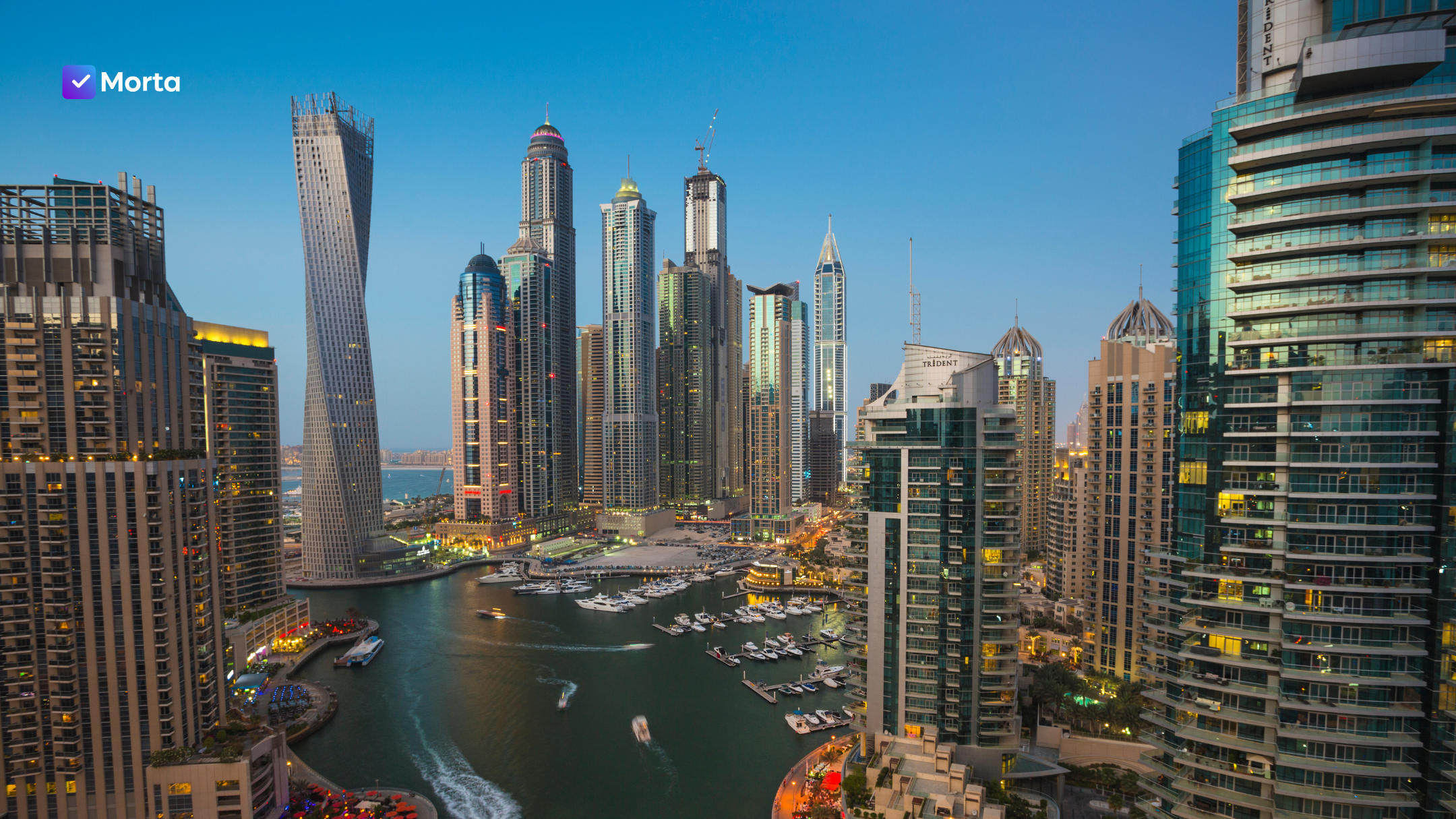
Dubai Marina and JBR sit below the very highest apartment rents in Bluewaters and DIFC, but they remain among the city’s most expensive and most actively searched waterfront areas.
Bayut’s 2025 report recorded average Dubai Marina rents of AED 110,000 for a one-bedroom apartment, AED 166,000 for a two-bedroom unit and AED 252,000 for a three-bedroom property. Property Finder’s broader 2026 range for Dubai Marina and JBR reaches as high as AED 165,000 for one-bedroom units, AED 290,000 for two bedrooms and AED 470,000 for three bedrooms.
The wide range reflects the age and quality of the building stock. A renovated apartment in a newer tower with an unobstructed view cannot be compared directly with an older unit facing another building.
This creates a clear market for selective refurbishment. A property flipper may be able to improve rent and resale value through layout changes, upgraded kitchens, bathrooms and better presentation. The opportunity has to be assessed against service charges, building reputation and the maximum price tenants will pay for that particular tower.
Living in one of the most expensive areas to rent in Dubai requires budgeting beyond the annual rent. Security deposits, estate agency fees, Ejari registration, utility deposits, cooling charges and moving costs can all arise near the beginning of the tenancy. Furnished and serviced properties may include some expenses while charging a higher base rent.
Payment structure also matters. Dubai rents are commonly quoted per year, but landlords may request one or several cheques. A lower number of cheques can sometimes help a tenant negotiate the price, although this depends on the landlord and current demand.
Tenants should also examine the complete occupancy cost. A villa with a pool and large garden can require more maintenance, cooling and water than an apartment. In a serviced residence, some of those responsibilities may be managed by the operator and reflected in the rent.
The Dubai Land Department Rental Index should be checked when evaluating an existing tenancy or proposed increase. An advertised asking rent for another property does not automatically establish the permitted increase for a current contract.
High rent indicates that tenants value a property, but it does not automatically indicate a strong development return. Prime land, specialist construction, larger floor areas, expensive amenities and higher service standards can absorb much of the additional income.
A developer therefore needs to compare achievable rent with land cost, construction cost, finance, operating expenditure, vacancy, service charges and the expected holding period. This calculation should be updated as the project moves from appraisal into procurement and delivery.
Rental evidence also needs to be specific. A three-bedroom apartment in Bluewaters should not be appraised using the rent of a branded penthouse. A standard villa in Dubai Hills should not inherit the rate achieved by a fully upgraded golf-course mansion.
This is where property development software becomes useful. Morta allows developers to manage the appraisal, project budget, procurement, reporting and delivery information within a connected system. If construction costs increase or the expected rent changes, the effect on the development can be assessed without relying on several disconnected spreadsheets.
The same discipline applies to property flipping. The investor needs visibility over acquisition cost, transfer fees, refurbishment, finance, service charges, marketing and the time required to secure a tenant or buyer. An attractive headline rent can disappear quickly once the complete cost of the strategy is recognised.
Dubai rental growth continued into early 2026, although the pace moderated after several years of rapid increases. CBRE reported that residential rents were 4.1 per cent higher year on year in the first quarter of 2026, while sales price growth slowed to around 9 per cent. Its UAE Real Estate Market Review for Q1 2026 also noted greater investor caution and a continuing concentration of off-plan activity in the mid-market.
This moderation has not affected every district equally. Prime and scarce homes can continue to perform strongly while secondary properties face greater price sensitivity. New handovers may also change local conditions quickly, particularly in master-planned communities where several phases complete within a short period.
Developers should avoid using one Dubai-wide forecast across a portfolio. Rental assumptions should reflect the unit type, competing pipeline, target tenant and exact micro-location. Sensitivity testing is essential where the appraisal depends on continued rental growth.
There is no single winner across every type of property. Bluewaters Island and DIFC sit among the most expensive apartment markets. Palm Jumeirah combines high apartment rents with an exceptional beachfront villa segment. Emirates Hills and Jumeirah Bay Island occupy the top end of the low-density mansion market, while large villas in Dubai Hills Estate and Tilal Al Ghaf can also exceed AED 1 million per year.
For most renters, the correct comparison begins with the required property type. A tenant seeking a one-bedroom apartment should compare Bluewaters, DIFC, Palm Jumeirah and Downtown Dubai. A family seeking a large detached villa will find more relevant evidence in Emirates Hills, Dubai Hills Estate, Tilal Al Ghaf and Palm Jumeirah.
For property developers, the most expensive areas in Dubai reveal where scarcity, employment, infrastructure, branding and lifestyle support pricing power. The address creates an opportunity, while the specification and delivery determine whether the property deserves the premium.
Morta helps developers maintain that connection from the original appraisal through cost planning, construction, handover and defect management. With clearer control over project information, teams can test rental assumptions against live costs and make decisions using the current position of the development.
If you are planning, delivering or managing a property portfolio in Dubai, visit Morta.com and book a discovery call today to see how Morta software can support your development.
